Lessons in Architecture: Seeing Architecture
Between drawings and buildings

Architecture has eternally served as a cross-disciplinary bridge between the sciences and arts. While being considered in the same realm as engineering and technology marking scientific development, it has also, along with painting and sculpture, been called the fine arts. The arts, that are appealing to the eye, popularly judged by external appearances, and in case of architecture, specifically the building exterior.
However, as an architect, the external appearance is certainly, just one of the several factors of interest in the discipline. There are other elements that precede construction and usage - plans, sections, elevations, imaginations and drawing those imaginations, all of which must ideally complement each other and harmonize. And yet, the process isn’t limited or encapsulated in these elements, it is more complex because this process differs between architects and geographies and methods. Buildings cannot be completely visualised through plans or any drawings in isolation. And understandably, not many people can perhaps, visualise architecture as disparate parts, cut sections, imagined elevations or distant plans. To a layperson, rightfully, architecture is a whole, complete in its body and maybe, surroundings, that is indivisible. And in the architect’s understanding of a building, there is an imagination that must come alive when the plans, elevations and sections synthesize, a piece of work that finds a body after its synthesis. This is hard to explain because the limits are by no means, clearly demarcated. This space of imagination is where the architect is an artist with the capacity to ideate and create. After all, just like all art, architecture can only be experienced. Any amount of text is only supportive, not explanatory. This inexplicable space between the process of designing and construction, is the space of possibilities and probabilities, which exists only in the mind of the architect. The ultimate experience of architecture is possible only if and when, this space of imagination gets translated physically, if at all.
Architects work with form and mass, just as sculptors do; and with colour and material, as painters do. However, independently, architecture is a functional art, that solves problems of utility. It is a process of confining space for dwelling, that specifically creates a framework around human lives. Utility is the factor that separates architecture from the other fine arts. For this reason, drawings do not capture the essence and meaning of any architect’s ultimate vision or intent. A plan drawn at a scale of 1:200, 1:500, 1:1000 or even 10,000 remains that many times away from reality. It can almost be visualised as what one would view of a building/s while sitting in a plane, flying that many kilometers in the air. Most often, window seats sell popularly for offering that sculptural view of architecture, urbanism and cities! However, it is upon descent, that at a certain height, suddenly buildings that appeared like boxes from air, develop a three dimensional form. And as the plane lands, they pass into a new stage of existence by taking human scale, the scale that actually matters because the decisive quality of architecture remains utility and usage, not appearance alone. They are shapes formed around human beings for them to live in, not merely looked at.
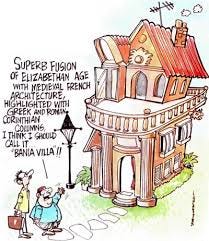
In this respect, the role of an architect is akin to that of a theatrical producer, who creates the limits and settings for a human purpose, that shall function by design. The actors aren’t their own, they are ordinary people with natural ways of being, with differing habits, culture, ethnicity, geographies and time. What fits one setting, may be (and mostly is) out of place in another. Therefore, a beautiful work of architecture of a past era cannot easily be replicated or redone in a different age when people, the actors, cannot naturally live up to it. It becomes false and pretentious. A popular example of this is the Punjabi-Baroque style of residential architecture in Delhi, where home owners with sudden increase in wealth find fascination in building homes that invoke royal elements of Baroque and Renaissance styles from Europe, placed in the setting of a north Indian Delhi that is dominated by its own local Punjabi culture. The result is a confusing and displaced mishmash, but has gradually found its way across a certain sections of people.
However, a significant challenge the architect faces is that their work is intended to live on into a distant unforeseeable future. A work of architecture sets the stage for a slow performance, that can adapt organically to changes and improvisations of its surroundings and actors. Preferably, the work must always be ahead of its time so its longevity is ensured. Furthermore, no matter how beautiful the conception of a building may be, it must be able to adapt to its users’ changing needs and lifestyles with time. Like plants, human beings cannot flourish if the environment is not conducive to their needs and preferences. In which case, buildings will fall into disrepair and change into something different from what the architect intended. And on that front, one of the proofs of a good piece of architecture is that it is being utilised and moulded as the architect intended, in tandem with the users of its space.
A distinctive feature of the art of architecture is that its creative process of conception is separate from its construction that brings it into existence, unlike paintings, for instance. An artist’s brush stroke is as individual as their handwriting, even differing in their own two brushstrokes. But architecture remains in the background, constantly adding to the canvas for other architects. An architect’s drawings in themselves do not create art, they are just instructions to aid the craftspersons who eventually bring the drawings into physical form of buildings. In fact, drawings are usually impersonal and unequivocal so as to convey the instructions clearly for seamless construction. At times, there are no drawings - it is the architect, themselves, verbally instructing how to construct minute details and parts. This makes the architect’s job like that of a composer who composes music that others will play - others, who aren’t interpreting or accentuating the composer’s vision, but creating with technical skills. Behind this scene, sits the architect who organizes the art form and holds the vision.

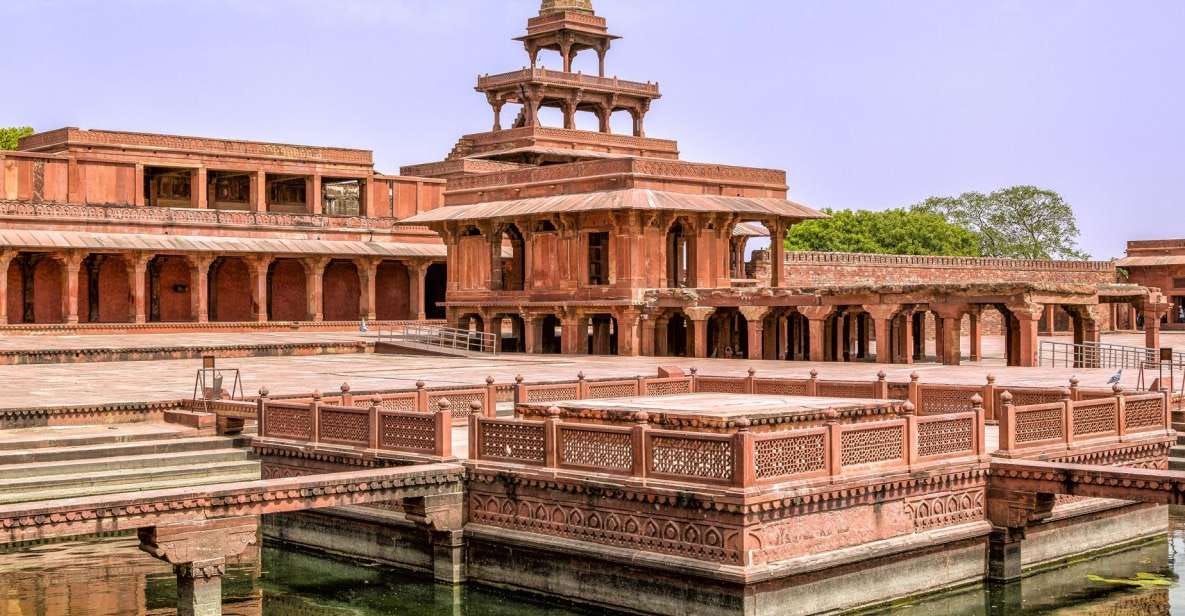
Against other art forms, architecture may appear negative and incapable of holding emotional sensitivity and intimacy between two people; yet, within this is the space where the architect tries to seek clarity of form that transcends drawings and sketches, that organises space in such ways that human emotions are evoked, senses are overtly or subliminally stimulated. Rhythm and harmony that have appeared in architecture since ancient and medieval times such as in Hindu temples and Islamic forts and palaces, can be attributed to this underlying idea of creating art. Unlike other branches of art, architecture employs cold, abstract form to connect intimately with a human being’s daily life.
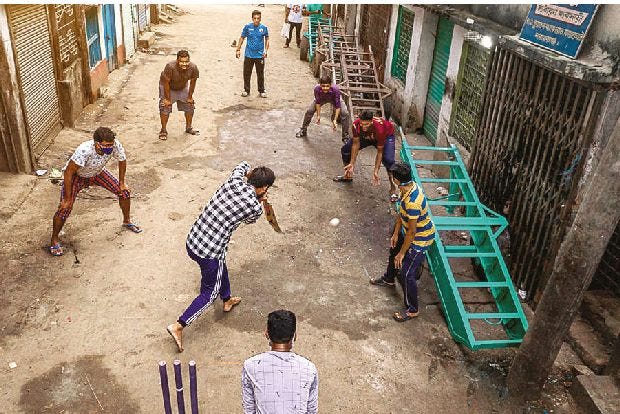
Architecture is an art produced by ordinary people, for ordinary people and therefore, ideally should be comprehensible to all, easily. Material, texture, form, structure and space together, allow for building a relationship between the inanimate and animate that is based on human instincts, experiences and discoveries common to all living beings. It takes years for a child to learn to stand, walk, swim or jump. But it takes far lesser time for a child to feel and experience the difference between hard and soft surfaces, short parapets and tall walls, and a lot of these experiences inherently come from tasting, smelling or handling these elements, crawling and toddling over them, which are basic human methods of experiencing the physical form. A work of architecture is experienced differently based on time, use, methods and even age. (insert image) Driveways and building corridors in India are a classic example of how innovative use influences the experience of space. While car drivers simply drive through the lanes and elders/adults simply walk through the corridor from one point to their destination, the corridor being a space of transit; children, on the other hand, manage to use the same space to play cricket because the longitudinal aspect of the design allows them to conveniently replicate the pitch between the batsman, bowler and wicketkeeper, while the fielders can improvise their positions along the length. These children may not particularly learn more about architecture than the adults, but unconsciously they do experience certain simple elements of architecture differently, the horizontal planes, vertical walls and parapets, the whole three-dimensional composition of the space. And in the absence of the children, the space returns to its static value.
Just how little children suck their thumb and stick it in the air to feel the cold air against it, we eventually learn to judge things according to weight, solidity, texture and temperature through innocuous experiences. We learn to throw lighter stones rather than heavier ones for the ease of weight and distance that they can travel. We learn to get the right kind of grip over a cricket ball or football based on texture, feel, smoothness, shine and solidity. We also recognise them as objects of extremely different character. Colour plays a role, but weight and strength are far more significant. Similarly, we learn the difference between hard and soft surfaces, and some surfaces so soft that they can moulded and kneaded by hand. The ground feels hard to us, as kids, therefore providing a sense of safety to walk on, whereas some materials feel even harder that they can become sharp and pointed such as diamond and objects cut like it. On the contrary, pliable things like bread dough feel so soft that they can be given rounded forms, for no matter how they are cut, the section shall always be an unbroken curve. Then there are forms that are hard or soft regardless of the hardness or softness of the material they are made from, for instance, the kullad, a traditional Indian pottery cup. Upon holding the hard cup in the hands, one can feel how the clay must have collected and come up on the wheel, moulded and submitted itself to the hands of the potter so it could be pressed and narrowed below while expanding above. This form is soft because of a collection of experiences gathered from childhood that have taught us how hard or soft materials respond to manipulation. Though the kullad is hard after firing, we are aware of its softness when it was shaped.

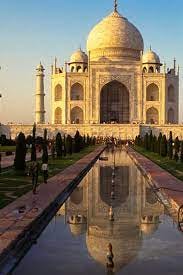
Such concepts of hardness and softness between material and form extend into architecture at the larger scale as well. The Taj Mahal (especially the dome) is perhaps, one of the softest and most gorgeously shaped structures in the world, among all mausoleums. On the other hand, the beautiful Hawa Mahal takes a rustic form that is hard and clearcut with projecting balconies and windows carved onto the facade. Certain period in architecture across the world have preferred buildings that are either soft or hard, for giving the impression of lightness or weightiness, and created differently in later periods for contrast. The white marble of the Taj Mahal intuitively feels lighter than the pink sandstone of the Hawa Mahal. These impressions are intrinsically connected to the surface character of materials. Very often, one does not need to touch or feel a material to perceive its qualities, such as the difference between fired clay, concrete, brick and stone. Alongside textures, one learns very early on, the difference between tautness and slackness. The strings of a guitar may feel tight when plucked to create a hum, whereas a fishnet hung up to dry appears reposeful in its slack and heavy lines. There are all the elements of architecture, and when designing, an architect usually calls a combination of these elements into play. To be able to see architecture, one must be aware and sensitive to these elements.
Turning from elements to the objects themselves that come together by cohesive order of material, form, shape, colour and other perceptive qualities, an object develops its own personality that transcends functionality and expands human vitality. For instance, a cricket bat helps a player to strike a ball better than his hand, but the bat in isolation is of no particular value to anyone. Using the bat, on a pitch, against a bowler, in the presence of fielders fills the batter with exuberance and life. Similarly, a sitar stimulates the artist differently, while exuding an almost aristocratic yesteryear charm involving tradition and culture, their preservation and continuity. But together, the cricket bat and the sitar do not conform with each other. At this point, an object becomes a living thing with its own physiognomy.
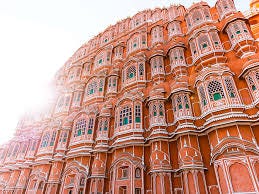
Objects become whole, like words that are read with a conception in the mind and not as independent alphabets. Extrapolating these objects into architecture, a building alone or a detail alone conveys nearly nothing essential because the purpose of all good architecture is to create an integrated whole. Throughout history in any part of the world, different periods have had a distinctive style - Renaissance, Rococo, Baroque, etc. Clothes, buildings, habits and lifestyles harmonised into that rhythm, that found a name given years later, by historians.
Understanding architecture is not the ability to determine different styles and features, but to see and experience it cohesively. It is necessary to observe the purpose of a built form and how it was designed for this purpose, the play of light and darkness, acoustics, textures, colour, strength and lightness and other elements that create it, why certain choices were made as they were for a purpose to be fulfilled, how two same-looking spaces differ in terms of their qualities, how they influence and are influenced by their surroundings.
Ultimately, a human being’s basic relationship with architecture can be narrowed down to the sense of a dwelling, a space of belonging, one that instills a sense of self and security. Children begin playing with tools and toys until they reach an age where the instinct is to build a kind of shelter - a cave under a bed, a room in an alcove, a hut under a dining table or any sort of dwelling that encapsulates their own imagined world. This game can vary but is common to almost all living beings, even animals who build their shelter under a bush or shrub, a hole in the ground or anything. The human being’s shelter is the only one that varies by preferences, necessities, climate, culture and traditions. Ultimately, in the adult’s creation, this play continues until they build their own house, surroundings, neighbourhood, colonies and eventually cities.
In this never-ending pursuit, to bring coherence, synthesis and relation into human being and dwelling, is the role of the architect.